
Hooked on the Right Plan
Most use the word towing for the whole problem. We get that. But from our side of the call, the first question is usually pretty simple: can the vehicle be loaded from where it sits, or does it need to be pulled back into reach first? A truck sitting disabled on pavement may need a tow. A pickup down a muddy shoulder or a car stuck below a snowy grade may need a pull before it can go anywhere. That difference shapes many Williams towing calls before we ever hook to the vehicle.
Towing means transport. Winching means extraction. A disabled vehicle has to be reachable, stable, and positioned where a tow truck can load it or lift it before transport begins. If it is stuck in dirt, snow, rocks, or a ditch, the first job is getting it back to a towable position.
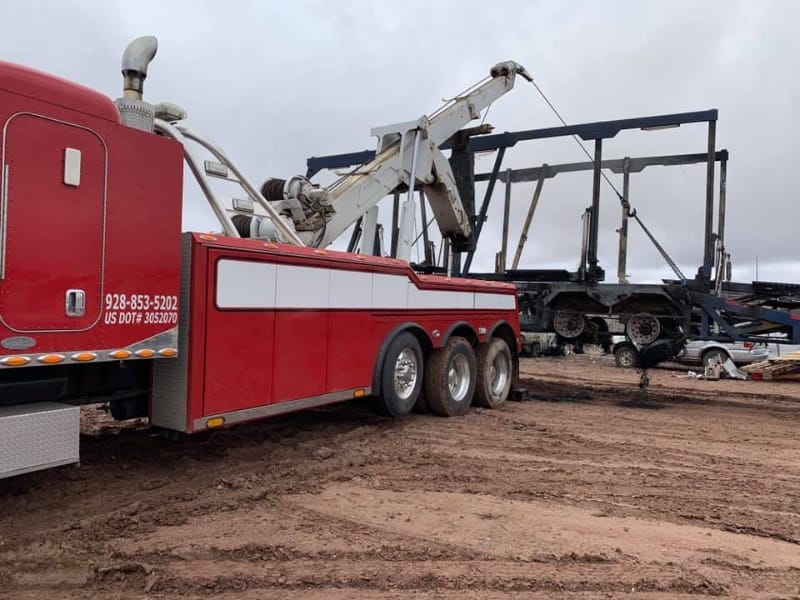
Towing Works When Access Is Clear
A tow is the right choice when the vehicle is already on solid ground and we have enough room to work. A rollback can carry the whole vehicle on its bed, which is useful for all-wheel drive, damage, or low-clearance situations. A wrecker can lift one end when the vehicle type, drivetrain, and condition allow it. The key is access.
That access can disappear very quickly as weather and road conditions change. Gravel, mud, snow, a steep shoulder, or a tight roadside angle can turn a basic tow into a recovery. We use towing for breakdowns, accident moves, shop transport, and vehicles that can be loaded without being pulled out first. Wheel damage, locked steering, low clearance, and all-wheel drive can still change the method, even when the vehicle is sitting on the road.
Winching Comes Before the Tow
Towing turns into winching when the vehicle is not reachable from a normal loading position. That could mean soft shoulder, a snowy ditch, rocky ground, or an angle that blocks a direct hookup. A winch line gives us controlled pulling power.
The pull has to be planned. Williams towing crews look at the ground, slope, anchor points, and vehicle position before tension goes on the line. Pulling from the wrong angle can slide the vehicle sideways, dig it deeper, or damage parts that were not the problem at first.
Some Calls Need Both
Plenty of Williams towing calls need winching first and towing second. The winch gets the vehicle back to stable ground. Then the tow truck loads it or carries it to the shop, yard, or home.
A quick way to think about it:
- Towing: the vehicle is accessible and ready to move
- Flatbed towing: the vehicle needs all wheels off the ground
- Heavy towing: semis, buses, RVs, and large commercial units
- Winching: the vehicle is stuck off-road or at a bad angle
- Recovery: the vehicle needs extraction, stabilization, or both
The terrain around Williams makes this common. Williams towing may involve I-40, local roads, forest access routes, snow, mud, and shoulders that look firm until a vehicle drops into them.
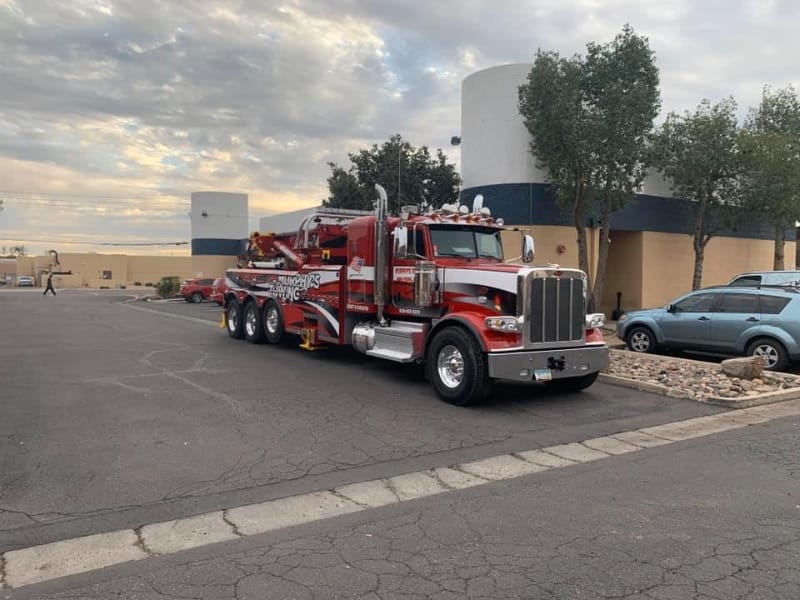
How Murphys Towing Handles Williams Towing When a Pull Comes Before the Tow
Murphys Towing handles Williams towing, winching, off-road recovery, heavy towing, semi-truck service, diesel support, and full-service truck repair across Northern Arizona. Since 2014, our family-operated company has worked on local streets, I-40 shoulders, forest access roads, and rough routes outside town.
Our dispatchers gather the vehicle type, exact position, ground conditions, access limits, and damage details before sending equipment. That information tells us if the call needs a flatbed, heavy wrecker, winch setup, or recovery gear. For Williams towing calls, the first truck needs to match the first task. Solid pavement, soft shoulders, snow, mud, and drop-offs all change what equipment should leave the yard. Whatever the job calls for, we take care of our customers with the right method from the start.
FAQs
Is winching the same thing as towing?
No. Winching pulls a stuck vehicle back to a place where it can be loaded or moved. Towing transports the vehicle after it is accessible.
When does a stuck car need a winch?
A car may need a winch if it is in mud, snow, a ditch, loose gravel, or another spot a tow truck cannot reach directly. The operator checks the angle and ground before pulling.
Can winching damage my vehicle?
It can if the wrong attachment point or pull angle is used. A trained operator uses proper connection points and controlled tension to reduce the chance of extra damage.
Does a flatbed tow truck have a winch?
Most flatbeds have a winch for loading vehicles that do not run or roll. Deeper recoveries may need stronger recovery equipment or a different truck.
What should I tell dispatch if my vehicle is off the road?
Share how far the vehicle is from pavement, what kind of ground it is on, and whether it is tilted or stuck against anything. Photos help the dispatcher choose the right equipment.
Can an all-wheel-drive vehicle be towed after it is winched out?
Yes, but it usually needs to ride on a flatbed after recovery. That keeps all four wheels off the road and helps protect the drivetrain.