
When the Legs Give Way
A loaded semi-trailer puts tremendous weight on its landing gear whenever it is parked without a tractor. If those supports buckle or sink into the ground, the front of the trailer can drop onto the pavement, leaving thousands of pounds of freight sitting at an awkward angle. For carriers arranging Williams trailer recovery, the immediate concern is how to get the trailer upright without causing further damage. That usually calls for professional heavy-duty recovery.
A trailer can drop for several reasons. The landing gear may collapse under the load, its supports may sink into soft ground, or the fifth wheel may fail to lock properly during coupling. The trailer’s front end can land on its underside, leaving bent landing gear trapped beneath it. And because the rear wheels remain on the ground, much of the trailer’s weight may now be resting on structural components never intended to support it that way.
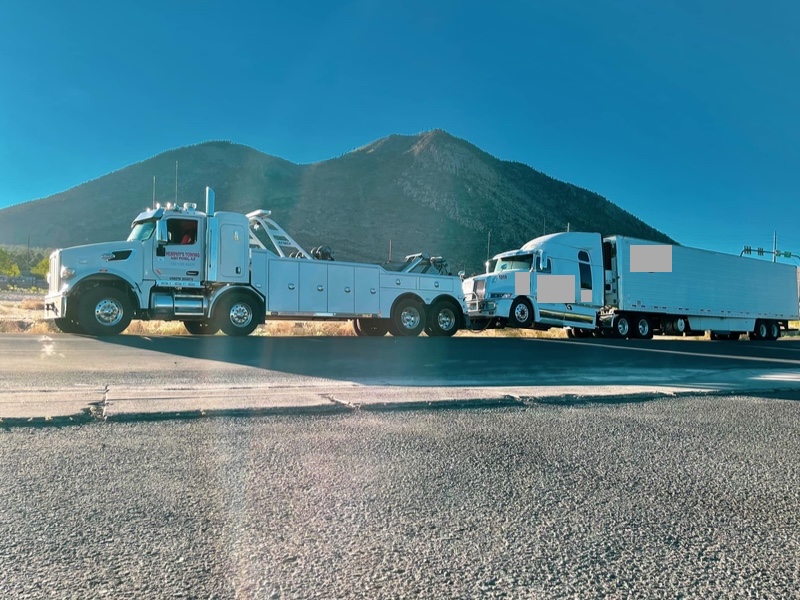
Why Can’t the Tractor Just Back Underneath?
The fifth wheel needs to line up with the trailer’s kingpin at the correct height. When the trailer has dropped too far, forcing the tractor underneath can damage the coupling or push against an already weakened frame. A recovery vehicle needs enough room to approach the trailer and establish a stable lifting position. Drivers should keep clear of the unsupported front end until the trailer has been secured.
First, Find the Weight
Before lifting begins, crews assess the trailer’s position, cargo weight and condition of the landing gear. A trailer carrying evenly distributed freight behaves differently from one with a heavy load concentrated near the front. If the cargo has shifted, one side may carry considerably more weight.
The ground matters as well. Asphalt can crack under concentrated pressure, while gravel or soft soil may allow lifting equipment to sink. Crews also check for damage around the kingpin, frame and underside of the trailer. These observations determine where lifting forces can be applied and how the trailer should be supported.
Getting the Trailer Back on Its Feet
For trailer recovery in Williams, lifting equipment must be positioned according to the trailer’s weight, height and available access. Depending on the situation, recovery crews may use heavy-duty wreckers, rotators or other lifting equipment to raise the front end gradually. Cribbing can provide temporary support as the trailer is lifted.
The process generally involves several steps:
- Secure the area: Keep people and passing vehicles away from the recovery zone.
- Stabilize the trailer: Prevent further movement before lifting begins.
- Raise the front end: Lift gradually while monitoring the frame and cargo.
- Inspect the connection: Check the kingpin, landing gear and fifth wheel before recoupling.
A dropped trailer recovery near Williams may require additional support if the landing gear is bent or completely destroyed. Even after the trailer reaches the correct height, it may need replacement landing gear or other repairs before it can be moved normally.
And What About the Cargo?
The freight inside can complicate an already difficult recovery. A sudden drop may shift pallets, loosen restraints or place additional pressure against the trailer’s front wall. With certain loads, raising one end of the trailer could cause the cargo to move again.
During Williams-area trailer recovery, our crews need to consider the load’s condition before deciding whether to lift the trailer with everything still inside. Depending on the cargo and damage, the carrier may need to arrange an inspection or transfer some freight to another trailer.
A trailer recovery around Williams can also involve checking whether the equipment is roadworthy afterward. A trailer that has been lifted successfully may still have a damaged frame, kingpin or landing gear. Those components need attention before the carrier can safely resume the journey.
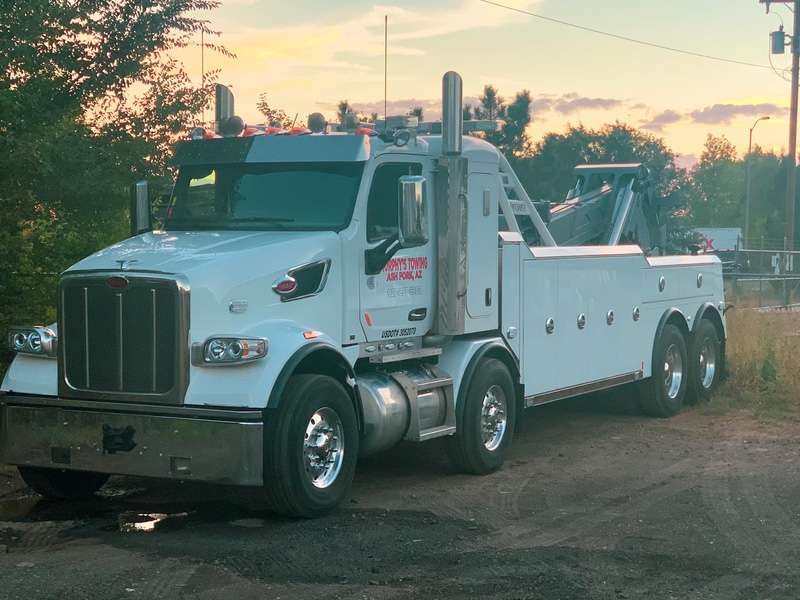
Murphys Provides Trailer Recovery in Williams and Beyond
At Murphys Heavy Towing, Off-Road Recovery & Semi Truck Repair, we handle dropped trailers and other heavy-duty recovery situations throughout Northern Arizona. Our services include trailer recovery, cargo load shifts and transfers, and heavy-duty towing. We operate from locations in Williams, Ash Fork, Flagstaff and Holbrook, serving commercial vehicles travelling through the region.
Since 2014, our family-owned business has grown to provide truck repair, diesel service and recovery assistance across the area. Our fleet includes heavy-duty wreckers, rotators and lifting equipment, while our ASE-certified technicians support our repair operations. For loaded trailer recovery in Williams, we assess the trailer’s position, structural condition and cargo before determining the appropriate recovery approach. The goal is to restore proper support to the trailer and identify any damage that needs attention before it returns to service.
FAQs
Can a loaded trailer be lifted without unloading it?
Yes, in some circumstances. Recovery crews assess the cargo weight, distribution and trailer condition before deciding whether the load can remain inside during lifting.
What happens if a semi-trailer’s landing gear collapses?
The trailer may drop onto its underside and become impossible to reconnect to a tractor. Recovery equipment is needed to lift and support the front end so the damage can be assessed.
Can a dropped trailer damage the kingpin?
Yes. A hard impact or improper coupling attempt can damage the kingpin or surrounding structure. Both the kingpin and fifth wheel should be inspected before reconnection.
Does a dropped trailer always need towing?
No. Some trailers can be lifted, inspected and reconnected to a tractor at the scene. Others require repairs, additional support or transport to a repair facility.
Can shifting cargo make trailer recovery more difficult?
Yes. Unevenly distributed cargo changes how the trailer’s weight is supported and can affect its stability during lifting. Freight may need to be secured or transferred before recovery continues.