
Storm Water Changes the Ground
A half hour of hard monsoon rain can turn a firm-looking ranch road near Ash Fork into pudding. We see it after summer storms, especially when a pickup, RV, or work truck leaves the packed road and drops one side into soft clay. The driver tries one more push on the throttle, the tires dig down, and suddenly the call becomes Ash Fork towing with off-road recovery planning.
Mud recovery is tricky because the ground keeps changing under the vehicle. A truck may look only a few inches stuck from the driver’s seat, but the frame can be resting on wet ruts underneath. Once the tires lose the ability to climb out, more throttle usually makes the hole deeper.
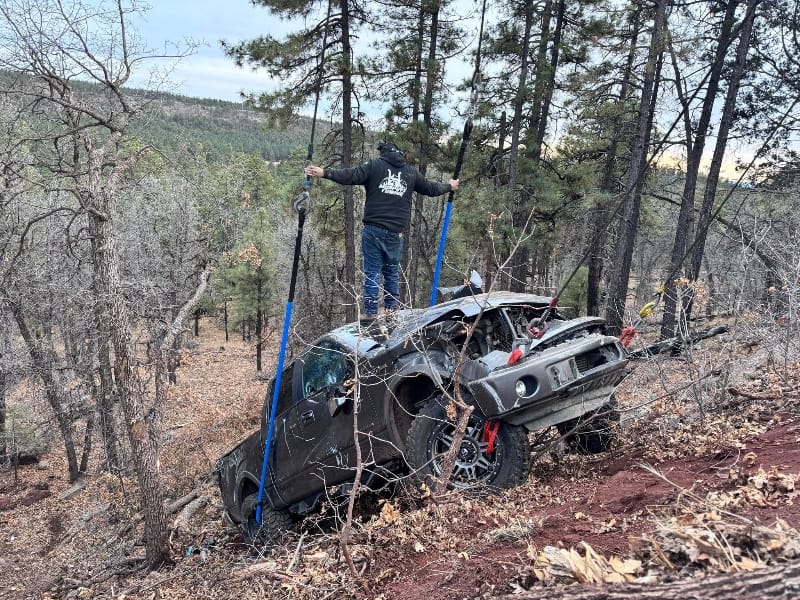
Why Monsoon Mud Catches Drivers Off Guard
Northern Arizona dirt can look dry on top and still be soft underneath. Water runs across low spots, washes gravel out of ruts, and leaves shoulders weak near cattle guards, forest roads, and dirt pull-offs. We have seen drivers get stuck while turning around after a storm because one rear tire found the soft spot nobody could see.
The common mistake is rocking the truck back and forth too long. That can bury the axle, pack mud into the brakes, and pull the vehicle sideways toward a ditch or fence line. A simple winch-out can become a longer recovery when the driver keeps trying after the tires stop gaining ground.
What We Check Before We Pull
Before we hook a line, we look at the ground first. We check slope, rut depth, where the tires are buried, and what the vehicle may hit once it starts moving. A straight pull can drag the vehicle deeper into the rut. A short redirect may bring it back toward firm ground with less strain.
We also ask a few quick questions on muddy recovery calls, because those details tell us if we need a basic winch-out, a recovery truck, or a heavier response:
- Is the vehicle loaded?
- Are any wheels off the ground?
- Is the frame sitting on mud?
- Is there a ditch, fence, tree, or wash nearby?
- Did the driver smell brakes or see fluid leaking?
- Can a tow truck reach firm ground for setup?
Why Off-Road Recovery Is Tricky
With Ash Fork towing after a monsoon, patience matters. A hard yank can tear suspension parts, bend a bumper, or pull a stuck truck sideways. We would rather build a steady pull, keep the line angle clean, and let the vehicle climb out without more damage.
Ash Fork towing calls near muddy shoulders and washed-out access roads often take more planning than people expect. The tow truck has to stay on ground that will hold its weight. If our truck sinks too, the whole job gets worse. That is why we may reposition, use boards, adjust the line, or take a few extra minutes before putting tension on the cable.
Williams, Ash Fork, and the Roads Between Storm Cells
Monsoon storms do not hit every road the same way. One stretch near Williams can be dusty, while a dirt road west of Ash Fork is slick enough to swallow a tire to the sidewall. On Ash Fork towing calls, we pay attention to where the water went, not just where the vehicle stopped.
A stuck-in-the-mud call can involve a commuter car on a soft shoulder, a ranch truck near a gate, a camper on a forest road, or a semi that dropped a tire off the edge of a yard. Ash Fork towing after storms is often about access. If the road in is worse than the spot where the vehicle is stuck, we have to plan the route before we plan the pull.
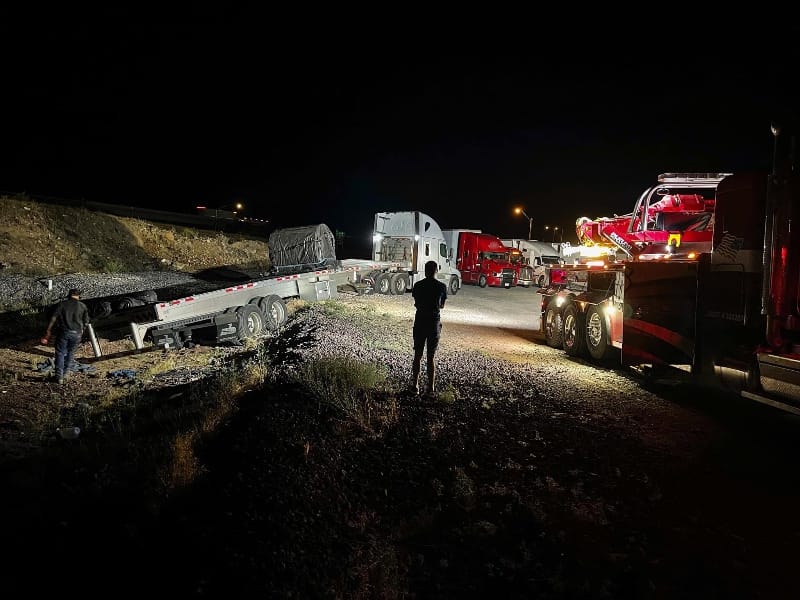
Murphys Towing Handles Ash Fork Towing When Monsoon Roads Turn Soft
Murphys Towing is a family-owned operation serving Flagstaff, Holbrook, Williams, Ash Fork, and nearby Northern Arizona communities. Since 2014, we have grown from a small local business into a full-service towing, off-road recovery, truck repair, auto repair, and diesel service team. Our Ash Fork towing work includes stuck vehicles, soft-shoulder recoveries, truck breakdowns, RV problems, and muddy road calls after summer storms.
Our ASE-certified technicians and towing operators see what monsoon weather does to local roads, especially near I-40, dirt access roads, and low spots that collect runoff fast. During storm season, the work is usually practical: find firm ground, protect the vehicle, choose the right pull, and keep the tow truck from becoming part of the problem.
FAQs
What should I do if my truck gets stuck in mud after heavy rain?
Stop pressing the gas once the tires start digging. Spinning the wheels usually buries the vehicle deeper. Get to firm ground if you can and call for recovery help.
Why does mud make a simple tow harder?
Mud changes the pull. The ground can shift, the tires can sink, and the vehicle may slide sideways instead of coming straight out. The operator has to check the ground before choosing a pull angle.
Can an RV or camper be pulled out of soft ground?
Yes, in many cases. The recovery plan depends on the weight, how deep it is stuck, and if a tow truck can reach firm ground nearby.
What details should I give dispatch for a mud recovery?
Give the vehicle type, exact location, road condition, how deep the tires are buried, and if the vehicle is loaded. Photos of the road and the stuck vehicle help a lot.
Should I wait for the mud to dry before calling?
Not usually. A stuck vehicle can sink deeper, block access, or get harder to reach if more rain comes in. Calling early gives the crew more options.
Can pulling a vehicle out of mud cause damage?
It can if the pull is rushed or attached to the wrong point. A careful setup helps protect suspension, bumpers, axles, and steering parts.