
Heavy Trouble, Short Time Window
Interstate 40 through northern Arizona runs through elevation changes, narrow shoulders, and long stretches without a nearby exit. When a semi goes down on this corridor, the conditions around the scene are rarely simple. Ash Fork semi towing calls from I-40 incidents arrive with variables that dispatch has to sort before any unit rolls. The first ten minutes of a semi crash response begin when the phone rings, not when the truck arrives.
A response that matches the scene needs the right information before departure. Vehicle type, lane position, cargo, and road surface all shape which equipment goes out. Sending the wrong configuration adds time and complicates a situation that may already be difficult. Our dispatchers ask targeted questions before assigning any unit.
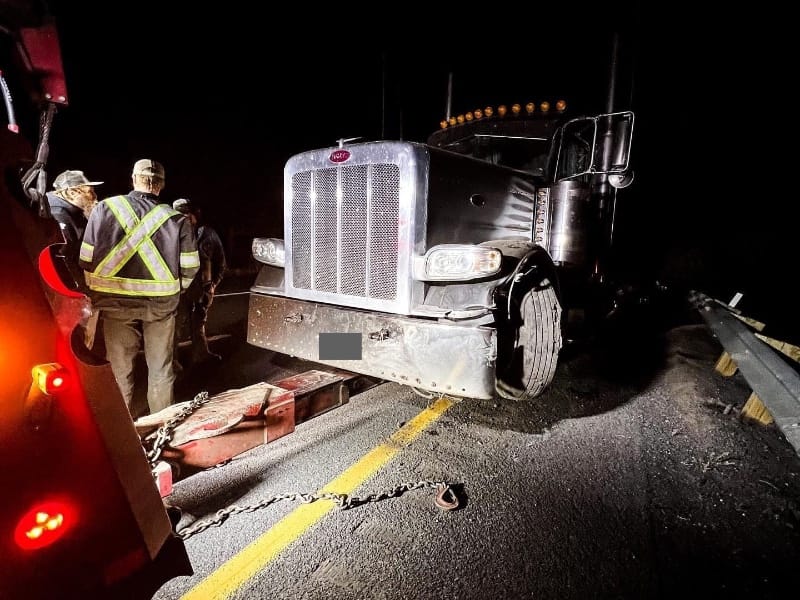
The Recovery Sequence That Holds the Scene Together
Scene control comes before any hook-up when the recovery truck arrives on an I-40 semi crash call. Warning lights and reflective gear go up while the truck positions between the crew and active lanes. No operator approaches the vehicle, and no equipment is deployed until that buffer is confirmed. On a fast-moving interstate, that sequence holds before anything else begins.
Once the work zone is protected, the operator reads the scene. Vehicle angle, road surface, terrain alongside the shoulder, and cargo all get assessed before rigging is committed. The plan that comes out of that read is what the crew works from. Changing it mid-recovery costs more time than building it right at the start.
How a Vehicle’s Position at the Scene Shapes Every Next Step
A vehicle that has rolled, jackknifed, or left the road surface is not a standard tow. Our operators assess slope, access points, and anchor options before any rigging decision. A loaded semi on soft shoulder or an embankment needs a different approach than one upright in an active lane. Ash Fork semi towing operators are trained for both and carry the equipment to handle either.
The First 10 Minutes: How a Coordinated I-40 Semi Recovery Runs
Here is how a coordinated Ash Fork semi towing response to an I-40 semi crash typically unfolds:
- Dispatch gathers vehicle type, position, cargo type, and lane status before assigning any unit
- Recovery truck arrives and positions as a work zone buffer before any operator exits
- Scene is read for vehicle angle, terrain, cargo risk, and access before rigging begins
- Work zone lighting and cones are set before any equipment approaches the vehicle
- Equipment matched to position: standard rigging for upright trucks, winching for rollovers or off-road positions
- All Ash Fork semi towing crews on I-40 incidents coordinate with on-scene agencies before extraction
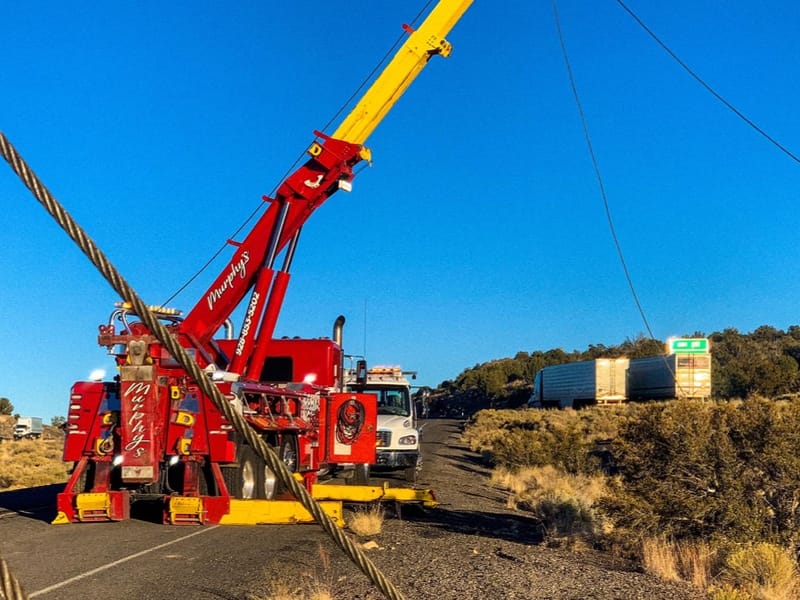
Murphy’s Heavy Towing: Ash Fork Semi Towing For I-40 Calls
Murphy’s Heavy Towing has worked the Ash Fork, Flagstaff, and Holbrook corridor since 2014. Our team knows I-40 in every season and every condition. Ash Fork semi towing on I-40 crash calls is a regular part of our work. Our ASE-certified operators handle heavy towing, off-road recovery, and diesel repair from the same team.
Family-owned and honest about pricing, Murphy’s approaches every call with the same standard. No hidden charges, no guesswork, and no missed communication on where we are or how long we will be. Ash Fork semi towing on I-40 gets a prepared crew, matched equipment, and a plan built from the scene.
FAQ
What should a semi driver do in the minutes immediately after a crash on an interstate? Move the truck to the shoulder if it is drivable and safe to do so. Turn on hazard lights and stay in the cab with the seatbelt fastened unless there is a fire or immediate safety risk. Call 911 if there are injuries or if the truck is blocking a travel lane. When calling for a tow, have your exact mile marker, direction of travel, number of vehicles involved, and load type ready.
Why does recovering a rolled or jackknifed semi take longer than recovering a passenger vehicle?
A rolled or jackknifed semi requires rigging and extraction before any transport can happen. The operator has to assess the position, select anchor points, rig winch lines, and stabilize the load before the vehicle can be moved. On soft or uneven terrain, that process takes longer than it would on flat pavement. The size and weight of a loaded semi also limit the speed at which each step can safely run.
What information does a dispatcher need to send the right equipment to a semi crash scene?
The most useful details are vehicle type and configuration, road position (upright or rolled), which lane or shoulder it occupies, and cargo type. Cargo type matters because it affects both which equipment is needed and what safety steps apply on scene. If the vehicle is blocking travel lanes, that should be stated immediately so the dispatcher can notify the right agencies before the unit departs.
What does it mean when a recovery crew reads the scene before rigging begins?
Reading the scene means the operator walks or inspects the area around the vehicle before connecting any equipment. They are confirming the vehicle’s angle relative to the road, the stability of the ground it is sitting on, nearby anchor options for winch rigging, and any cargo or fluid risks. The information gathered in that read determines the rigging plan and which equipment comes into contact with the vehicle first.
How does cargo type affect the way a semi crash is handled on an interstate?
Cargo affects recovery in two ways: load stability and hazard risk. A trailer carrying a shifting or damaged load may need to be partially offloaded before the truck can be moved safely. Hazardous materials require additional steps before any recovery equipment approaches, including spill assessment and coordination with fire and emergency agencies. An empty trailer is the simplest recovery. A full or hazardous load adds steps to every stage.
What is the difference between a tow and a recovery on a semi crash call?
A tow moves a vehicle that is accessible and in a position where it can be loaded or hooked up directly. A recovery involves extracting a vehicle that cannot be towed from its current position, such as one that has rolled, gone off the road, or become stuck in soft terrain. Many semi crash calls start as recoveries before a tow can happen. The two processes require different equipment and different operator skills.